







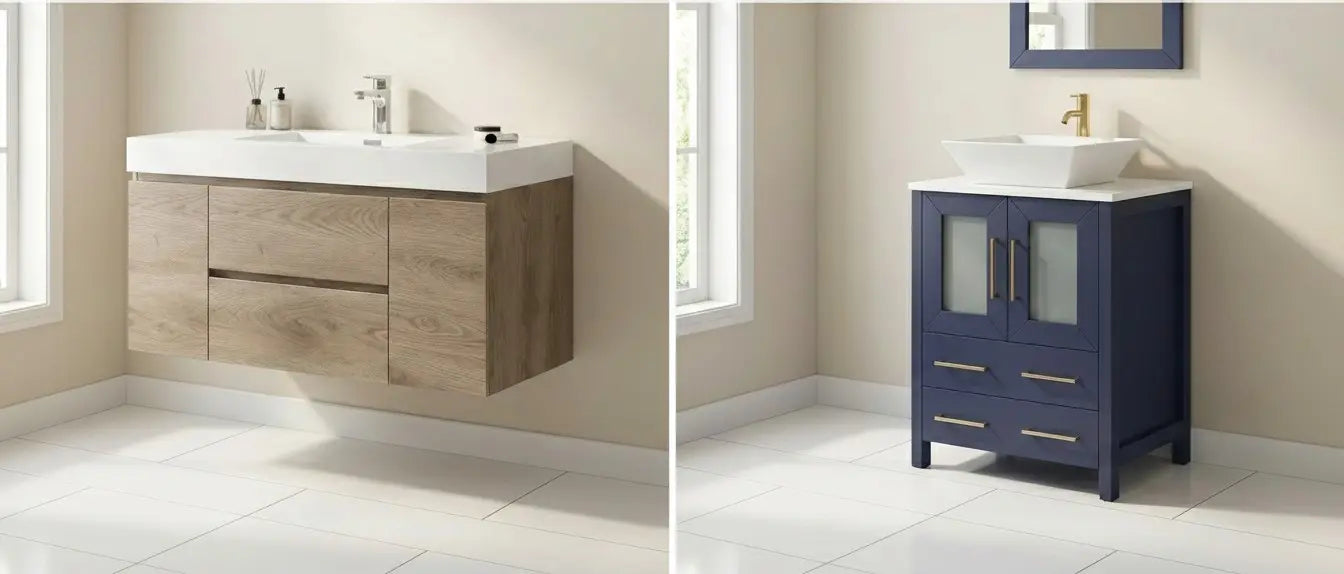
The core difference between floating vs freestanding bathroom vanities is how they are supported and how they distribute weight. Floating vanities attach directly to the wall and leave open space underneath, while freestanding vanities sit fully on the floor. Floating styles often suit modern or compact bathrooms, while freestanding units fit traditional layouts and standard wall construction more easily.
What Makes a Vanity Floating or Freestanding?

Understanding the structural setup is important before comparing design or storage. These two vanity types may look similar at first glance, but their installation method changes how they function in a bathroom.
Floating Bathroom Vanity

A floating bathroom vanity is mounted directly onto wall framing. It does not touch the floor, and its weight is supported by structural anchors inside the wall.
Because the cabinet is suspended, installation depends heavily on proper wall preparation.
Key characteristics:
- Wall-mounted installation
- Visible floor space underneath
- Weight supported by wall studs
- Plumbing often concealed inside the wall
- Modern and minimal appearance
This design can make a bathroom feel more open, but the structural demands are higher.
Freestanding Bathroom Vanity

A freestanding vanity rests entirely on the floor, either with legs or a solid base. The floor supports the full weight of the cabinet, countertop, and sink.
This is the most common vanity style in many homes.
Key characteristics:
- Floor-supported design
- No structural wall reinforcement required
- Works with standard plumbing layouts
- Full-height cabinet storage
- Traditional or transitional appearance
Because it does not rely on wall load capacity, installation is typically more predictable.
How Structural Support Differs Between Floating and Freestanding Bathroom Vanities
One of the most important differences between floating vs freestanding bathroom vanities is structural load handling.
Floating Vanity Wall Requirements

A floating vanity transfers all weight into the wall. That includes:
- Cabinet weight
- Countertop material
- Sink weight
- Water load
- Daily leaning pressure
For proper installation, the vanity must anchor directly into wall studs or reinforced blocking. If the wall lacks sufficient support, structural reinforcement may be required before mounting.
This is especially important in remodel projects where walls were not originally built to support suspended cabinetry.
Freestanding Vanity Load Distribution

Freestanding vanities distribute weight directly onto the floor surface.
Because the floor handles the load:
- Wall strength is not a factor
- Reinforcement is rarely needed
- Installation complexity is reduced
As long as the floor is level and stable, structural preparation is minimal.
For beginners comparing options, this is often the most practical difference.
How Floating and Freestanding Vanities Affect Bathroom Space and Visual Flow

Beyond structure, floating vs freestanding bathroom vanities affect how a bathroom feels visually.
Floating Vanities and Open Space

Floating vanities create visible floor area beneath the cabinet. This can:
- Make small bathrooms feel less crowded
- Improve light flow
- Simplify floor cleaning
However, the open base reduces vertical cabinet depth.
“Some homeowners mention that floating vanities make cleaning easier and help the bathroom feel less crowded, especially in compact layouts.”
Freestanding Vanities and Presence

Freestanding vanities provide a grounded, solid appearance.
They often:
- Offer greater enclosed storage
- Support heavier countertop materials
- Create a traditional bathroom look
In compact bathrooms, the full-height cabinet may make the space feel tighter.
Cabinet Storage: Floating vs Freestanding

Storage capacity often becomes a deciding factor between floating vs freestanding bathroom vanities.
Floating vanities:
- May prioritize drawer storage
- Use less vertical space
- Sometimes, limit deeper cabinet compartments
Freestanding vanities:
- Use the full cabinet height
- Offer deeper storage space
- Support heavier storage loads
If storage volume is critical, this difference becomes practical rather than aesthetic.
Installation & Structural Preparation

Installation effort varies significantly between the two styles.
Floating vanity installation typically requires:
- Precise stud location
- Structural anchoring
- Accurate leveling
- Wall evaluation
“Contractors often note that floating vanity installation requires more preparation time compared to floor-supported units.”
Freestanding vanity installation typically involves:
- Positioning the unit
- Leveling on the floor
- Connecting plumbing
The difference is not about difficulty alone, but about structural preparation.
Maintenance and Cleaning Considerations

Maintenance also differs based on how the vanity interacts with the floor.
Floating vanities:
- Allow easy cleaning underneath
- Reduce moisture exposure at the cabinet base
Freestanding vanities:
- May collect dust near base panels
- Sit directly on the floor, increasing exposure to water over time
In bathrooms with frequent splashing, base durability can matter.
Where Floating and Freestanding Vanities Work Best

Different bathroom layouts often align better with one style or the other.
Floating vanities commonly fit:
- Modern interiors
- Smaller bathrooms
- New builds with planned wall support
Freestanding vanities commonly fit:
- Traditional interiors
- Remodels using existing plumbing
- Older homes without reinforced walls
Both styles are widely available in North American markets, including retailers such as bathify.com and bathify.ca, depending on structural conditions and layout needs.
Which Vanity Should You Choose Based on Your Needs?

The choice between floating vs freestanding bathroom vanities depends less on style alone and more on structure, storage needs, and renovation conditions.
Choose a floating bathroom vanity if:
- Your wall can support structural mounting
- You want visible floor space underneath
- Your bathroom is small, and you want it to feel more open
- You are planning a modern or minimal layout
- You are comfortable preparing the wall for reinforcement if required
If you want to see how different wall-mounted designs vary in size and configuration, Bathify offers a premium range of floating bathroom vanities suitable for modern layouts.
Choose a freestanding bathroom vanity if:
- You prefer a simpler installation
- Your wall structure is uncertain or not reinforced
- You want full-height cabinet storage
- Your bathroom layout already supports floor-mounted units
- You are remodeling and want minimal structural modification
For traditional layouts and full-height storage options, Bathify also carries a premium selection of freestanding bathroom vanities designed for standard floor-supported installation.
In many cases, the deciding factor is structural readiness. Floating vanities rely on wall strength, while freestanding vanities rely on floor stability. Storage volume and installation effort usually become secondary considerations after that.
Frequently Asked Questions
1. Do floating vanities increase home resale value?
Floating vanities can increase perceived value in modern homes because they create a clean, updated look. Buyers often associate wall-mounted designs with newer construction and contemporary renovation standards.
2. Can you install a floating vanity on drywall alone?
No. Drywall by itself cannot support the weight of a floating vanity. The unit must be anchored into wall studs or reinforced blocking behind the wall surface to ensure safe weight distribution.
3. Are floating vanities adjustable in height?
Yes. One advantage of floating vanities is flexible mounting height. Unlike freestanding units with fixed legs or bases, wall-mounted vanities can be installed slightly higher or lower based on user preference.
4. Which vanity type is better for bathrooms with uneven floors?
Floating vanities are often better for uneven floors because they do not rely on floor contact for support. Freestanding vanities may require shimming and careful leveling during installation.
5. Do floating vanities affect plumbing access?
Floating vanities sometimes require plumbing adjustments inside the wall for a cleaner appearance. Freestanding vanities usually work with standard floor or wall plumbing without major modification.
6. Are freestanding vanities more stable than floating ones?
Both are stable when installed properly. However, freestanding vanities feel more grounded because they sit directly on the floor, while floating vanities rely entirely on secure wall anchoring.
7. Which vanity type works better with double sinks?
Freestanding vanities are often preferred for double sinks because they distribute heavy countertop and sink weight across the floor. Floating double vanities are possible but may require reinforced wall framing.
8. Do floating vanities help prevent water damage?
They can reduce long-term base damage because the cabinet does not sit directly on the floor. This allows better airflow underneath and minimizes prolonged moisture exposure.
9. Are floating vanities suitable for large bathrooms?
Yes. While often used in compact spaces, floating vanities can also create a high-end, spa-like look in large bathrooms when paired with wide countertops and extended wall space.
10. Which option is more budget-friendly overall?
Freestanding vanities are generally more budget-friendly because they require less structural preparation. Floating vanities may involve additional labor costs for wall reinforcement and precise installation.


