







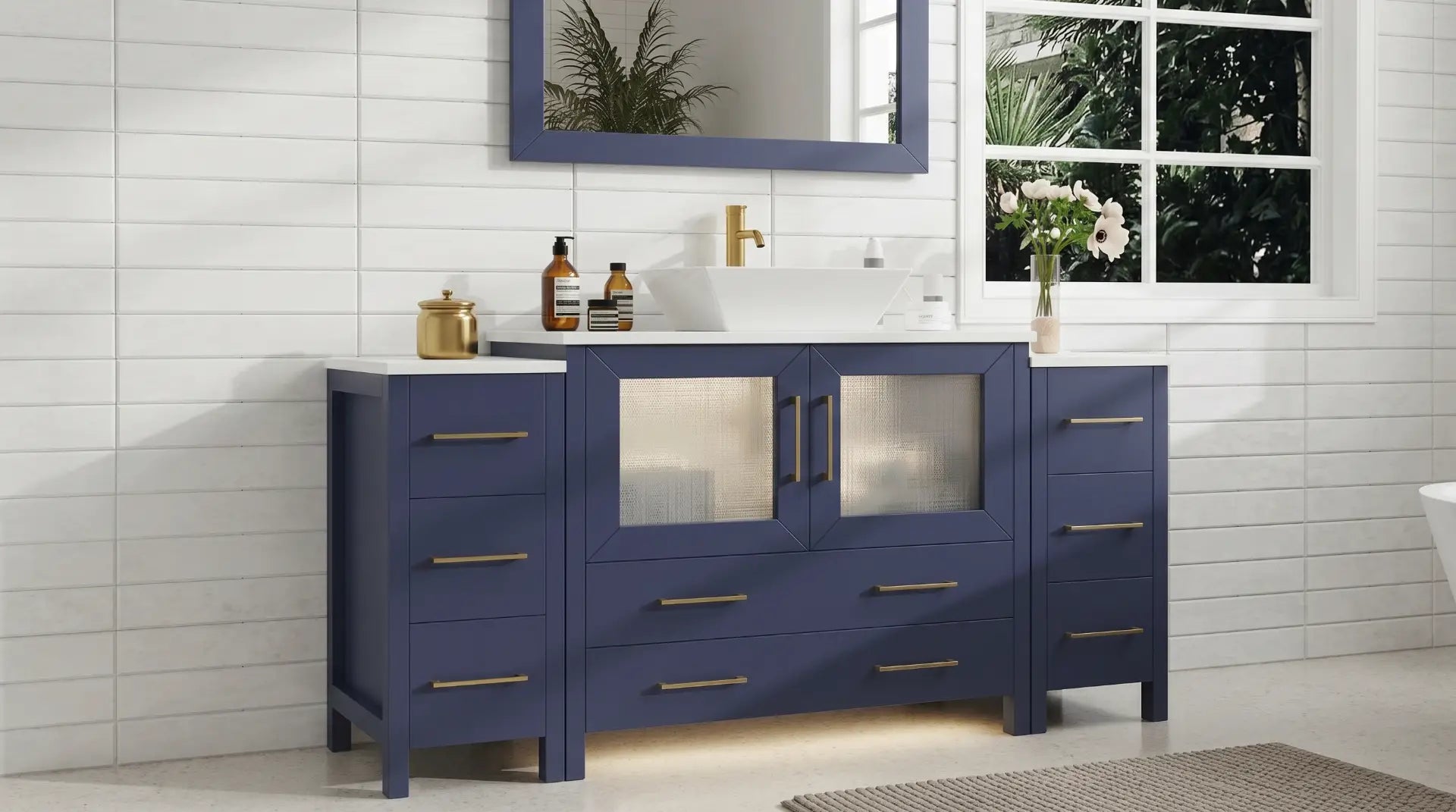
Vessel sinks are the most visually dramatic vanity option available - and the most likely to disappoint buyers who skipped the practical checklist. This guide covers every decision that matters before you buy.
A vessel sink is the most distinctive option in bathroom design - a basin that sits fully above the countertop, turning a functional fixture into a sculptural focal point. In a powder room, a primary ensuite, or any bathroom where bold design intent matters, the right vessel sink creates a visual moment that no other sink type can replicate.
But vessel sinks carry one of the highest buyer-regret rates of any bathroom fixture, at roughly 1 in 4 owners. Almost always, the regret traces back to the same avoidable decisions: a vanity cabinet that's too tall for comfortable use, a faucet with the wrong reach that creates constant splash, a material that requires more maintenance than the buyer expected, or a setup that looks extraordinary in a showroom and awkward in the actual bathroom. Every one of these outcomes is preventable. This guide covers all of them.
The 1-in-4 regret rate for vessel sinks doesn't reflect poor products - it reflects buyers who fell in love with the aesthetics before working through the practical checklist. Vessel sinks have genuinely unique technical requirements that don't apply to undermount or drop-in sinks: the cabinet must be shorter than standard, the faucet must be taller and specifically sized for the vessel's rim height, and the drain requires a longer tailpiece extension. None of these are difficult to get right. But all of them must be confirmed before purchase, not discovered after installation. The five decisions in this guide are the ones that matter.
Vessel sinks have real advantages over other sink types. They also have real trade-offs that determine whether the decision is right for a specific bathroom and household. Both sides of this picture are worth understanding before buying.
- Strongest visual impact of any sink type. A vessel sink is the focal point of any bathroom it's in - it draws the eye immediately and defines the room's aesthetic identity more than any other single fixture
- Extraordinary material and style variety. Ceramic, stone, glass, hammered copper, concrete, wood, river rock - no other sink type offers this design range
- Easier to swap out later. A vessel sits on the countertop rather than being cut into it - replacing or upgrading it requires no countertop modification
- Can correct ergonomic height issues. In older bathrooms with low vanities (28-30"), a vessel sink raises the effective basin height without replacing the entire cabinet
- More countertop surface visible. Because the basin sits above rather than cut into the counter, more of the countertop material is visible and usable around the bowl
- Relatively accessible DIY installation. No precise undercounter cutout required - the basin rests on the surface with a drain hole the only countertop penetration needed
- Splash and water collection at the base. The gap between the vessel rim and the countertop surface collects water, toothpaste, and soap residue - requires daily wiping that undermount sinks do not
- Cabinet height must be lower than standard. Standard 34-36" vanities are too tall for a vessel - the combined height makes the basin uncomfortable. Cabinet must be 30-32" for most vessels
- Requires a vessel-specific tall faucet. Standard deck-mount faucets sit too low for a vessel bowl - a taller single-hole faucet or wall-mounted faucet is required, adding cost
- Not ideal for children or short adults. A correctly-installed vessel typically brings the rim to 34-36" - already at the top of comfortable reach for shorter users
- Most have no overflow drain. Unlike undermount sinks, most vessel bowls do not include an overflow - if the faucet is left running, the basin overflows onto the countertop
- Less forgiving of daily casual use. A powder room vessel used briefly by guests is ideal; a primary bath vessel used by a family with children daily generates more maintenance than most people anticipate
Vessel sinks perform best in powder rooms and single-user primary baths where design is the priority. The bathroom that maximizes a vessel sink's advantages - visual drama with manageable daily maintenance - is a guest-facing powder room or a primary bath used primarily by one adult. The bathroom where vessel sinks most often disappoint: a family shared bathroom used by children daily, or any bathroom where cleaning consistency is difficult to maintain. Design choices should fit how the bathroom is actually used, not how it photographs.
These five decisions are what separate a vessel sink installation that looks extraordinary and works effortlessly from one that looks right in product photos and causes daily frustration. None require professional expertise - just accurate measurements and the right product sequence.
The most common vessel sink mistake - by a wide margin - is installing a vessel bowl on a standard-height 34-36" vanity. A standard vanity plus a 5-6" vessel bowl creates a total rim height of 39-42 inches. That's 3-6 inches higher than the ergonomic comfort zone for most adults, causing shoulder strain and elbow awkwardness at every daily use. The fix is simple: choose a shorter cabinet. A vanity cabinet at 28-32" in height, combined with a vessel bowl of 4-6", brings the total rim height to the correct 34-36" range.
- Target rim height confirmed: 34" for households with children or shorter adults; 35-36" for average adults
- Vessel bowl height measured from manufacturer specs (typically 4-7 inches)
- Required cabinet height calculated: target rim height minus bowl height minus countertop thickness (usually 1-1.5")
- Cabinet selected at or near the calculated height - not at standard 34-36" height
- Confirmed the combined cabinet + top + bowl = within ±1 inch of target rim height

A vessel sink requires a faucet specifically designed for above-counter installation. Standard bathroom faucets sit too low - the spout would be at or below the vessel rim, making the faucet useless. A vessel faucet must have enough spout height to clear the rim of the bowl entirely, with the water landing inside the basin at the drain centerline.
The two correct faucet configurations for vessel sinks are: a tall single-hole deck-mount faucet (mounted on the countertop beside the bowl) or a wall-mounted faucet (mounted on the wall above and behind the bowl). Wall-mounted requires supply lines inside the wall - a significant installation consideration. Tall deck-mount is the more accessible and most common choice.
- Faucet spout height confirmed to clear vessel rim by 1-3 inches when installed at counter level
- Spout reach confirmed: water lands near drain centerline when running - not near the outer edge of the bowl
- If wall-mounted: supply lines in wall confirmed available or planned before ordering
- Faucet finish matches all other hardware in the bathroom (towel bar, mirror frame, light fixtures)
- Flow rate: aerated 1.2-1.5 GPM specified - standard or high-flow faucets create more splash in vessel bowls
Vessel sinks are available in a wider range of materials than any other sink type - ceramic, porcelain, tempered glass, natural stone, hammered copper, concrete, resin, and even reclaimed wood. Each has genuinely different maintenance requirements. The right choice isn't just about aesthetics; it's about matching the material's care demands to how the bathroom is actually used day-to-day.
Non-porous glaze surface resists staining, requires no sealing, cleans with mild soap. The most forgiving material for daily use. Timeless white or off-white options work in virtually every bathroom style.
The correct choice for: daily-use bathrooms, family bathrooms, anyone who wants the vessel aesthetic with minimal upkeep. White ceramic is the market's top-selling vessel material for good reason.
Spectacular visual effect - especially colored or frosted glass. Non-porous and stain-resistant. However, water spots and toothpaste are highly visible on clear glass, requiring daily wiping to maintain the premium appearance.
The correct choice for: powder rooms and low-traffic bathrooms where cleaning discipline is high. Not recommended for family bathrooms or daily multi-user setups where wiping down the exterior after every use is impractical.
Marble, travertine, granite, slate, and river stone create the most organically luxurious vessel sinks available. Each is unique. All natural stone requires sealing at installation and periodically thereafter - unsealed stone stains from cosmetics, toothpaste, and cleaning products within months.
The correct choice for: premium primary bathrooms and design-forward powder rooms where natural material investment is deliberate. Must commit to proper sealing maintenance schedule or choose a different material.
Hammered metal vessels are naturally antimicrobial and develop a living patina over time that many homeowners consider part of their appeal. They cannot be cleaned with harsh chemicals or abrasives - only mild soap and specific metal-safe cleaners. The patina changes with exposure; some owners love this, others find it unexpected.
The correct choice for: rustic, farmhouse, or artisan-aesthetic bathrooms where the organic character of aging metal is part of the design intent. Confirm care requirements match the household's cleaning routine before purchasing.
Concrete vessels are defining fixtures in industrial and modern bathrooms. Raw concrete is highly porous and must be sealed with a penetrating sealer before installation. Sealed concrete is durable and cleanable with mild products. Resin composites mimic concrete without the sealing requirement.
The correct choice for: industrial, loft, or modern bathrooms where concrete's textural quality is part of the design language. Resin composite provides the same look with far lower maintenance if sealing commitment is a concern.
Sintered stone (manufactured under extreme heat and pressure) offers the visual character of natural stone with none of its porosity. Non-porous, scratch-resistant, heat-resistant, and never needs sealing. The fastest-growing vessel sink material in 2025-2026, driven by homeowners who want natural stone aesthetics with everyday durability.
The correct choice for: daily-use primary bathrooms that want the luxury look of stone without sealing maintenance. Sintered stone vessels bridge the gap between ceramic's practicality and natural stone's visual premium.

Many bathroom vanity cabinets are sold pre-configured for undermount sinks - with a larger countertop cutout that's incompatible with a vessel bowl. A vessel sink requires a countertop with only a small drain hole (typically 1.5-2 inches in diameter) for the drain assembly. The countertop surface must remain solid and flat around the drain hole - the entire bowl sits on that surface.
When selecting a vanity for a vessel sink, verify three things: the cabinet is sold without a pre-installed top (or with a vessel-ready top), the countertop material is structurally solid and level (not particleboard or hollow-core), and the cabinet height is appropriate for the vessel bowl you've chosen. Purchasing a vessel-specific vanity package eliminates all these compatibility questions.
- Cabinet height is 28-32" - not standard height (to accommodate vessel bowl)
- Countertop is vessel-configured with single small drain hole - not a large undermount cutout
- Countertop material is structurally solid - stone, quartz, solid wood, or tile on a solid substrate
- Countertop supports the vessel bowl weight - particularly important for stone vessels above 25 lbs
- Faucet hole position is set back far enough from the drain that the spout reaches the bowl center
Because a vessel sink sits above the countertop rather than within it, the vertical distance between the drain opening of the bowl and the P-trap inside the cabinet is greater than in a standard undermount setup. This requires a longer drain tailpiece (the vertical drain pipe) to connect the bowl's drain fitting to the P-trap below. Most vessel sink drain assemblies include an extended tailpiece - confirm this when ordering and measure the vertical distance at your specific cabinet height to verify compatibility.
A critical purchasing note on overflows: most vessel sinks do not include an overflow drain. This means if the faucet runs unattended, the basin fills and overflows onto the countertop. A small number of vessel designs include a decorative overflow; these are worth specifying if the bathroom will be used by children or anyone prone to leaving the water running. If no overflow, a drain pop-up (rather than a grid drain) allows the user to quickly drain a full bowl - a practical convenience.
- Drain assembly includes extended tailpiece appropriate for the cabinet height - confirm length against the vertical distance from vessel drain to P-trap
- Overflow drain status confirmed: vessel has one (specify if required) or does not have one (acceptable for adult-only bathrooms)
- Drain finish matches faucet finish - both in the same finish color/treatment
- Pop-up drain selected if overflow is not present - allows quick drainage of a full basin
- If replacing an undermount sink: old drain cutout in countertop will need to be replaced - vessel-ready top ordered as part of the project
A powder room vessel sink is one of the most effective design decisions in a home renovation. The room is small, it's guest-facing, and the entire design statement is made by the single vanity composition. A vessel sink in a powder room delivers the maximum visual return for the investment - it transforms a utilitarian space into a genuine design moment. And because powder rooms see only hand-washing use (no hair care, no face washing, no children's daily routines), the maintenance demands that make vessel sinks challenging in other contexts simply don't apply. The powder room is where vessel sinks earn their reputation as showpiece fixtures.
A vessel sink in a primary bathroom used by one adult daily is a strong choice when the height math is done correctly and the material is chosen for daily use (ceramic, porcelain, or sintered stone). The visual impact elevates the most-used room in the home, and a single user maintains the daily wiping habit more consistently than a shared bathroom. The key qualification is that children should not be primary users of the bathroom - the height of a correctly installed vessel puts the rim at 34-36", which is the limit of comfortable reach for younger children.
Vessel sinks in daily-use family bathrooms accumulate the most maintenance challenges: water pooling at the bowl base, splash from multiple users with varied habits, and the ergonomic difficulty of a high rim for younger household members. These are not insurmountable, but they do require consistent cleaning discipline and an acceptance that the vessel will look maintained only when actively maintained. Families who still want the vessel aesthetic in a shared bathroom should choose ceramic (not glass or stone), specify a pop-up drain, and plan for daily rather than weekly base wiping.
A semi-recessed vessel sink is partially set into the countertop rather than fully above it - the bowl sits 2-3 inches below its rim, reducing the total height impact and minimizing the gap at the base where water collects. This configuration reduces splash, makes daily cleaning easier, improves ergonomics for shorter users, and still provides the visual distinctiveness of a vessel profile. For daily-use bathrooms where a fully above-counter vessel seems impractical, the semi-recessed option is the design compromise that keeps the aesthetic without the maintenance trade-offs.
- Target rim height decided: 34" for shorter users; 35-36" for most adults
- Vessel bowl height noted from manufacturer product specs (mm or inches - typically 4-7")
- Countertop thickness accounted for (typically 1-1.5")
- Required cabinet height calculated: target rim height minus bowl height minus top thickness
- Cabinet selected at the calculated height - confirmed not a standard-height 34-36" vanity
- Faucet identified as vessel-compatible (tall single-hole or wall-mounted)
- Spout height confirmed to clear vessel rim by 1-3 inches
- Spout reach confirmed: water stream lands at drain centerline, not bowl edge
- Flow rate: 1.2-1.5 GPM aerated specified
- Faucet finish matches all other bathroom hardware
- Material chosen based on actual maintenance tolerance: ceramic (low), sintered stone (low), glass (medium), natural stone (high - sealing required)
- Vanity cabinet confirmed vessel-compatible: correct height, solid countertop, single drain hole
- Countertop can support vessel bowl weight (especially important for stone vessels above 25 lbs)
- If existing vanity being retrofitted: countertop replacement planned - old undermount cutout is not compatible
- Drain assembly includes extended tailpiece appropriate for above-counter installation height
- Overflow status confirmed - specified if required for the bathroom's users
- Drain finish matches faucet finish
- Pop-up drain selected (preferred over grid drain for above-counter vessels)
- Dry-fit of vessel on countertop planned before any silicone is applied - alignment and faucet clearance confirmed first
Shop vessel sink vanities at Bathify
Browse our collection of vessel-ready vanities - configured for above-counter installation with correctly-sized cabinets, solid countertops, and vessel-compatible drain setups. Free shipping on orders over $50.


