







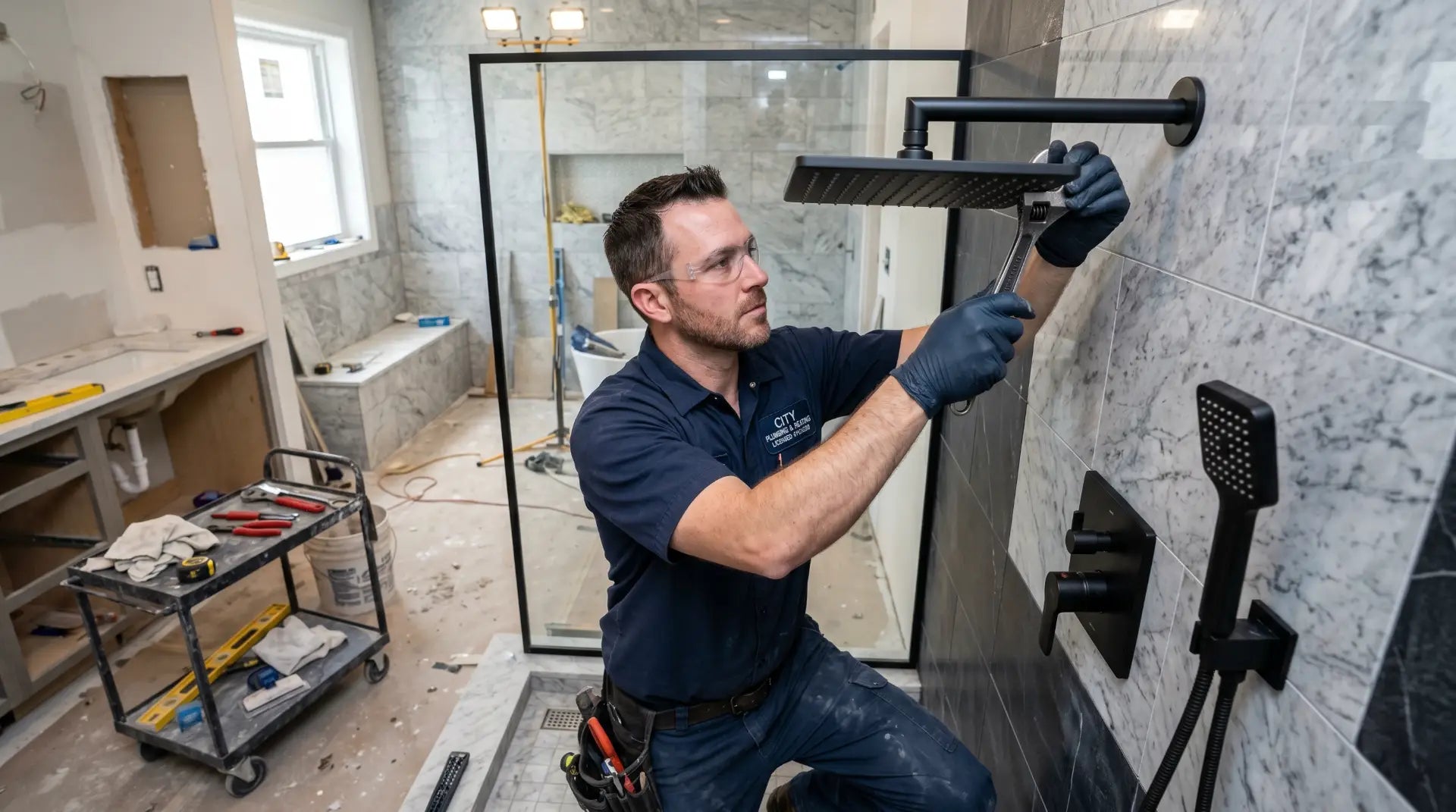
A clear, honest walkthrough of every stage - including exactly which steps are safe to DIY and which ones need a licensed plumber, before you open a single wall.
Most "how to install a shower system" content online falls into one of two unhelpful categories: oversimplified YouTube-style videos that skip the plumbing code realities, or contractor-written technical pages that assume you already know the terminology. This guide sits in between - a complete, honest walkthrough that tells you exactly which steps you can do yourself, which steps legally require a licensed plumber in most US states, and where the expensive mistakes actually happen.
If you're installing a brand-new rough-in valve as part of a renovation, this is the full process from planning to first shower. If you're only replacing trim on an existing rough-in - a much simpler job - jump straight to Step 6.
Every shower system installation splits into two distinct phases with very different skill and legal requirements. Knowing the split before you start prevents wasted time, failed inspections, and costly rework.
Permit requirements, inspection schedules, and licensing rules genuinely vary by city and county across the US. Always confirm with your local building department before assuming any part of this process is DIY-legal in your specific jurisdiction - the guidance in this article reflects common US practice, not a guarantee for your address.
For trim installation (DIY-friendly):
Additional items a licensed plumber will use for rough-in work:

Start by calling your local building department to ask whether your specific installation requires a permit. New rough-in work or relocating an existing valve almost always does under the International Plumbing Code and most state amendments; trim-only replacements usually don't. This single phone call, made before any work begins, prevents the most common and avoidable compliance headache in residential plumbing.
While you're planning, decide on your valve type and outlet count. If you're unsure between a pressure-balancing or thermostatic valve, our shower valve buying guide walks through that decision in detail. If you want flexibility to change your trim style later without reopening the wall, a universal rough-in valve like the Delta MultiChoice system is worth strong consideration at this stage - it's a decision that's much cheaper to make now than after the wall is tiled.

Standard US installation height for the valve control is 38-48 inches from the shower floor, with 38-42 inches being the most common comfortable range. The shower arm or fixed head typically sits 72-80 inches from the floor, adjusted based on the height of the primary users. If anyone in the household uses a wheelchair or has mobility considerations, ADA guidelines specify additional height and reach requirements worth confirming before the wall is opened.
One detail that trips up first-time renovators: valve depth must account for the finished wall thickness, not the current open-stud depth. If you're adding new tile backer board and tile on top of existing studs, the valve needs to sit deep enough that its finished face lands flush once all those layers are in place - not flush with the bare studs. Most rough-in valves include a depth indicator or adjustable extension specifically for this reason; confirm with your plumber that they're accounting for your final wall buildup before they set the valve.
Measure twice on tile thickness: Large-format tile, additional waterproofing membrane, or thicker backer board can add an extra half-inch or more compared to a standard installation. Tell your plumber your exact tile and substrate plan before they set valve depth - this is cheaper to get right the first time than to fix after tiling.

This is the stage where a licensed plumber opens the shower wall (or works within an already-open wall during a full renovation), positions the rough-in valve body at the confirmed height and depth, and connects it to your home's hot and cold supply lines using copper (soldered) or PEX (crimped or expansion-fitted) piping, depending on your home's existing plumbing material and local code preferences.
For multi-outlet systems - like a rain head plus hand shower plus body jets - this stage also includes routing separate supply lines from the valve body to each outlet location, sized and positioned according to the specific system's installation instructions. This is precisely the work that distinguishes a true multi-function shower system from a panel-tower unit, as covered in our shower panel systems review - independent supply lines from a quality rough-in are what allow each outlet to maintain consistent pressure.

Before the wall is closed, your plumber should pressure test the rough-in plumbing using test caps and a gauge, checking every connection for leaks under realistic water pressure. Many jurisdictions require this test to be verified by a building inspector before the wall can legally be closed - your plumber will know your local requirement, but it's worth asking directly so you can be present or get documentation if needed.
This step exists specifically to catch problems while they're still cheap to fix. A loose fitting or improperly soldered joint found now means reopening a few inches of unfinished wall. The same problem found after tile work means cutting into finished, often expensive tile to access the same joint - turning a 20-minute fix into a multi-day, multi-hundred-dollar repair.

Once the pressure test passes (and any required inspection sign-off is complete), the wall can be closed with backer board, waterproofing membrane, and tile. This stage is independent of plumbing licensing - many homeowners handle their own tile work, while others bring in a tile contractor. Either way, allow adequate curing time for thinset, grout, and any waterproofing membrane before running water through the system, typically 24-72 hours depending on the products used and manufacturer instructions.
Make sure whoever does the tile work is aware of the exact valve face location and depth, since the trim escutcheon plate needs to sit flush against the finished tile surface in the next step. Communication between the plumber and tile installer (or yourself, if you're doing the tile) prevents a frustrating mismatch at trim installation.

With the wall finished and cured, trim installation is the most accessible part of the entire process for most homeowners. This typically involves: removing the protective cap from the rough-in valve stem, attaching the cartridge if not pre-installed, securing the escutcheon plate flush against the tile, attaching the handle, and connecting the shower arm and head (or volume controls and additional outlets for multi-function systems).
Use plumber's tape on any threaded connections to ensure a watertight seal, and apply a thin bead of silicone caulk around the escutcheon plate edge where it meets the tile - this prevents water from getting behind the plate and into the wall cavity. Follow your specific trim kit's manufacturer instructions closely, since cartridge orientation and handle assembly differ between brands and series. For example, the Delta Classic Monitor 13 Series and Delta Monitor 14 Series trim kits are both designed specifically to pair with a separately purchased MultiChoice Universal rough-in valve - confirm you have the matching rough-in before ordering trim.
Take photos as you go. If you ever need to service the cartridge or troubleshoot an issue years later, photos of the original assembly sequence save significant time figuring out how everything was oriented.

Run the shower through its full temperature range, from cold to maximum hot, checking every connection point for drips or leaks. For multi-outlet systems, test each outlet individually and then in combination, confirming pressure and temperature hold steady as designed. Check behind and around the escutcheon plate after the first few uses for any sign of moisture, which would indicate the caulk seal needs attention.
If you specified a thermostatic valve, this is also when you'll set your maximum temperature stop according to the manufacturer's instructions - typically 105-110°F for a family bathroom, as covered in our shower valve guide. Once everything checks out clean after a few days of normal use, your installation is complete.
Covered in detail in Step 4 - a leak found after tile work means cutting into finished tile to fix it. Always confirm the pressure test happened and passed before any backer board or tile goes up.
If the valve is set based on bare-stud depth rather than the final wall surface, the trim escutcheon plate won't sit flush - or worse, won't reach the valve stem at all. Confirm your tile and substrate buildup with your plumber before the valve is set, not after.
A Delta MultiChoice Universal rough-in accepts a range of Delta trim kits, but not Moen, Kohler, or other brands. Always confirm exact compatibility between your specific rough-in and any trim kit before purchasing - this is especially relevant if you're upgrading trim years after the original rough-in installation and the original product details aren't fresh in memory.
Unpermitted plumbing work can surface as a problem during a home sale inspection or insurance claim, sometimes years after the original installation. The relatively small upfront cost and time of a permit is minor compared to the potential complications of unpermitted work discovered later.
If you're planning an installation, choosing the right rough-in and trim combination upfront makes every step in this guide simpler. Here are the standout options for different installation scenarios.

The MultiChoice Universal valve gives you the flexibility to change your shower's style and functionality later without altering the plumbing behind the wall - meaning your plumber installs this rough-in once during Step 3, and you can swap trim styles years later without reopening anything. The valve body supports single, dual, or dual thermostatic cartridge configurations with integrated back-to-back capability and a 90-degree tub drop with PEX shower riser, covering most US bathroom layouts.

This Step 6 trim pairs directly with a separately purchased MultiChoice Universal rough-in valve, completing the installation with a Monitor pressure-balance valve engineered to keep water temperature within plus or minus 3.6°F when other fixtures (a toilet, washing machine, dishwasher) draw water elsewhere in the house. The soft rubber Touch-Clean spray holes simplify long-term maintenance, directly addressing the mineral buildup concerns covered in our low water pressure guide.

The Aqua Rondo 3-way valve includes details that directly solve Step 2 and Step 3 challenges: a finished wall indicator and level built into the unit for easier, more accurate installation, plus pressure test caps included for Step 4. Solid brass waterway construction and a protective plastic cover guard the valve from damage during the tile and finishing stages covered in Step 5.
| Stage | Who Does It | Typical Time | Typical Cost |
|---|---|---|---|
| Planning & permit | Homeowner | 1-3 days (permit processing varies) | $0-$200 permit fee |
| Rough-in installation | Licensed plumber | 1-2 days | $300-$900 labor + parts |
| Pressure test & inspection | Plumber + inspector | Same day to 1-2 days for scheduling | Often included in plumber quote |
| Wall closing & tile | Homeowner or tile contractor | 2-4 days + cure time | $500-$3,000+ depending on tile |
| Trim installation | Homeowner (DIY) or plumber | 1-3 hours | $0 labor (DIY) or $100-$250 (plumber) |
| Testing & final check | Homeowner | 30 min + a few days of monitoring | $0 |
Respect the rough-in/trim split, and the rest of the project goes smoothly
Shower system installation isn't one job - it's two distinct jobs with very different skill, tool, and legal requirements stitched together. The rough-in valve installation, supply line connections, and pressure testing genuinely require a licensed plumber and typically a permit in most US jurisdictions. The trim installation - handle, plate, arm, and head - is accessible to most confident DIYers once the rough-in is in place and the wall is finished.
If you're planning a full renovation: budget for licensed plumber time on the rough-in, confirm permit requirements with your local building department first, and never let tile work begin before pressure testing passes.
If you're only upgrading trim on an existing rough-in: confirm exact brand and series compatibility, then this entire project can realistically be a DIY afternoon.
In either case: choosing a universal rough-in valve like the Delta MultiChoice system gives you the most flexibility to change your mind on trim style in the future without ever reopening the wall again.
Shop Rough-In Valves & Trim Kits at Bathify
Delta MultiChoice, KubeBath, and matching trim kits - engineered for a smooth installation from rough-in to first shower. Shipped across the USA. Free shipping on orders over $50.


