







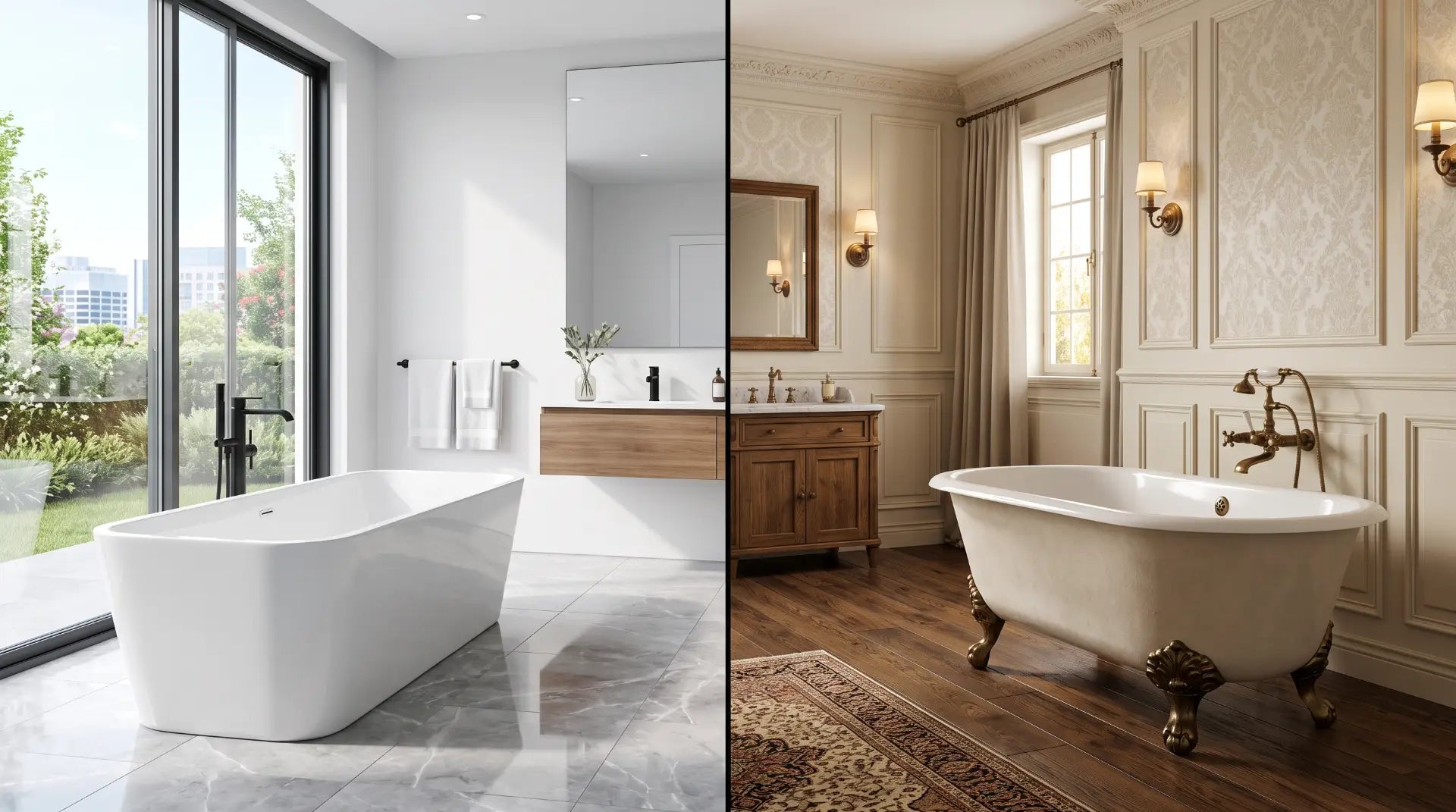
One is light, affordable, and endlessly versatile. The other is a heavyweight heirloom that holds heat like nothing else - but costs more and may need a reinforced floor. This guide settles which bathtub material actually wins over the long run, and for whom.
Cast iron wins on pure longevity. A porcelain-enameled cast iron tub can last several decades, shrugs off scratches and dents, and holds heat longer than any common material. If "long-term" means a single fixture that outlives the rest of the bathroom, cast iron is the literal answer - many vintage cast iron tubs are still in daily service a lifetime later.
Acrylic wins on practical, real-world value - which is what "long-term" means for most homeowners. It's a fraction of the weight and cost, installs anywhere (including upstairs) with no floor reinforcement, comes in far more shapes and styles, feels warm to the touch immediately, and can be buffed or refinished if the surface ever wears. Over a typical ownership window, a quality reinforced acrylic tub delivers most of the cast iron experience for a fraction of the money and hassle.
So the honest verdict: for most modern homes, acrylic is the smarter long-term choice; for a forever-home heirloom in a heavy-use or vintage-style bathroom, cast iron earns its premium. The rest of this guide shows exactly why - and if you're still choosing tub type and installation overall, start with our complete bathtub buying guide.
"Cast iron lasts forever" is true - but it's not the whole decision. A tub that outlives your house is only an advantage if it fits your floor, your budget, and the style you actually want. Plenty of homeowners pay the cast iron premium, then wish they'd bought a lighter, cheaper, more flexible acrylic tub they could have installed themselves. Weigh longevity against the six other factors below before you decide.

An acrylic bathtub is made from vacuum-formed sheets of acrylic - a moldable, solid-color plastic - that are then reinforced underneath with fiberglass and resin for strength. That construction is the key to acrylic's whole personality: because the material is heated and molded, it can take almost any shape, size, or color, which is why acrylic dominates modern tub design. The color runs through the sheet rather than sitting on top as a coating, so quality acrylic won't fade, and the fiberglass backing gives it real structural rigidity despite its light weight.
The result is a tub that's lightweight, affordable, warm to the touch, and easy to install and live with. Its surface is smooth and non-porous (resisting mold and mildew), though it's softer than enamel, so it can scratch - the upside being that scratches can usually be buffed out or repaired rather than requiring replacement. Acrylic is the default material for most freestanding, alcove, and drop-in tubs sold today, and it's what Bathify's own tub collection is built around.

A cast iron bathtub is made by pouring molten iron into a mold, then fusing a thick layer of porcelain enamel over the surface. That enamel is what you actually touch and see - a hard, glossy, glass-like finish bonded to a dense iron core. The manufacturing is the source of every cast iron trait: the heavy iron makes the tub extraordinarily strong and gives it exceptional heat retention, while the enamel coating provides a smooth, stain-resistant, scratch-resistant surface that keeps its looks for decades.
The trade-offs are equally rooted in the material. Cast iron is very heavy - often several hundred pounds empty - so it frequently needs floor reinforcement and professional installation. The molding process limits the range of shapes compared to acrylic, which is why cast iron leans toward classic, traditional silhouettes (the enduring clawfoot tub is the archetype). It's also a premium purchase. But it lasts: cast iron tubs regularly outlive the bathrooms around them, and many contain a high percentage of recycled iron, adding a sustainability angle to their longevity.
Acrylic and cast iron are the two most popular choices, but they sit at opposite ends of a wider material spectrum. Knowing the neighbors helps you decide whether one of these two is really your best pick, or whether a fifth option fits better.
Molded acrylic reinforced with fiberglass. Lightweight, warm to the touch, comes in the widest range of shapes and styles, easy to install anywhere, and repairable if scratched. The modern default and Bathify's specialty.
Enamel-coated iron. Unmatched durability and heat retention, timeless looks, lasts decades. But very heavy (often needs floor reinforcement), premium-priced, and limited to more classic shapes.

The lowest-cost, lightest material - but the least durable. Thinner shell flexes, loses heat fastest, and fades or scratches sooner. Fine for rentals and low-use baths; outclassed by acrylic for daily use.

Stone resin blends natural stone and resin for a solid, warm, luxurious soaker with great heat retention. Porcelain-enameled steel is a lighter, cheaper cast-iron alternative; copper is a distinctive artisan choice. All are more niche than acrylic or cast iron.
This is cast iron's home turf. The dense iron core and hard porcelain enamel make a cast iron tub extremely resistant to scratches, dents, and general wear - the kind of surface that looks the same after twenty years of daily use. Its lifespan is measured in decades, and it's common for a cast iron tub to outlast the bathroom it was installed in. The one vulnerability is the enamel: a heavy dropped object can chip it, though that's rare and repairable.
Acrylic is durable in a different, more forgiving way. Reinforced with fiberglass, it resists cracking and cracking-related failures well, and it won't rust or corrode. Its softer surface is more prone to surface scratches and can stain if harsh cleaners are used - but those same qualities make it easy to repair, buff, and refinish. A well-cared-for acrylic tub typically lasts around 10-15 years or more, and refinishing can extend that. So while cast iron clearly wins raw lifespan, acrylic's repairability and low replacement cost narrow the practical gap.
Verdict on durability: Cast iron wins outright for longevity and impact resistance. Acrylic is durable and easily repaired, but doesn't match cast iron's multi-decade lifespan.
If you love a long soak, this factor matters more than almost any other - and cast iron leads. Cast iron is slow to warm up (the tub feels cool when you first touch it), but once the hot water heats the iron, the entire tub acts like a radiator and holds the water's warmth noticeably longer than any common material. For a 45-minute soak with no top-ups from the faucet, nothing beats it.
Acrylic is a strong second. It's warm to the touch immediately - no cold shock stepping in - and it's insulated well enough to hold heat far better than fiberglass or steel. It won't keep water hot quite as long as cast iron over an extended soak, but for most bathers the difference is modest, and a quality deep acrylic soaker retains heat perfectly well. Insulation and a snug fit help; the deeper the water, the better any tub holds heat.
Verdict on heat: Cast iron holds heat longest. Acrylic is a warm-to-touch, well-insulated second that satisfies most soakers - fiberglass trails both.
This factor decides more purchases than people expect, because it's not just about the tub - it's about the floor under it and how the tub gets into the room. A typical acrylic tub weighs roughly 50-100 pounds empty, light enough to carry in, maneuver, and install on any floor of the home without structural work. That makes acrylic the natural choice for upstairs bathrooms, apartments, and any renovation where simplicity matters - and it opens the door to DIY installation within reason.
Cast iron is the opposite. An empty cast iron tub can weigh several hundred pounds, and hundreds more once filled with water and a bather. On a solid ground-floor slab that's usually fine, but on an upper floor or in an older home, the framing may need reinforcement before the tub goes in - added cost, added trades, added time. Cast iron almost always requires professional installation and often several people just to move it. Factor this in early: the tub's price is only part of a cast iron budget.
Heavy or light, confirm the tub fits the room and the delivery path before ordering, and match the drain location if you're replacing. Get it right with our bathtub sizes guide, and see freestanding vs built-in for how installation style affects the job.
Verdict on weight & installation: Acrylic wins decisively - lighter, easier, cheaper to install, and floor-agnostic. Cast iron's weight is a real logistical and structural cost.
Acrylic is the more affordable material by a wide margin, and the gap holds across the whole ownership picture.
A cast iron tub typically costs two to four times more than a comparable acrylic tub - a function of both the raw material and the manufacturing. Installation widens the gap: cast iron's weight adds labor and may require floor reinforcement, while a lightweight acrylic tub is quick and inexpensive to set. Total installation for a straightforward acrylic swap sits at the lower end of the range; a cast iron install pushes toward the top once you account for extra hands and possible structural work.
Here's where cast iron argues back. Spread its higher price over several decades of service, and the annual cost can look reasonable - you may never buy another tub. Acrylic costs less upfront but has a shorter lifespan, so over a very long horizon you might replace or refinish it once. For most homeowners, though, who move or remodel within 10-20 years, acrylic's lower total outlay wins in practice. The "buy once, cry once" case for cast iron only fully pays off if you stay put for the long haul.
Verdict on cost: Acrylic wins on upfront and installation cost and on total cost for typical ownership windows. Cast iron only wins the math if you keep it for decades.
Day to day, both materials are easy to keep clean - a wipe-down with mild soap and water and a soft cloth is all either needs, and both have smooth, non-porous surfaces that resist grime. The differences show up in what can go wrong and how you fix it.
Acrylic is the softer surface, so its risks are scratches and, if you use abrasive cleaners, dulling or staining. The upside is repairability: minor scratches can be buffed out or filled with an acrylic repair kit, and the entire surface can be professionally refinished to look new. Just stick to non-abrasive cleaners and soft sponges to protect the finish.
Cast iron is nearly maintenance-free thanks to its hard enamel - it resists scratches and stains that would mark acrylic. Its one failure mode is a chip in the enamel from a heavy impact, exposing the iron beneath. Chips can be patched, and a worn or dated cast iron tub can be fully reglazed to restore it, which is exactly how so many vintage tubs stay in service.
Both materials can be refinished instead of replaced - often for a fraction of the cost of a new tub. If your existing tub is structurally sound but tired-looking, refinishing may be the smarter move. Our bathtub refinishing guide covers DIY vs professional reglazing for both acrylic and cast iron.
Verdict on maintenance: Roughly even. Cast iron resists damage better day to day; acrylic is easier and cheaper to repair when damage happens. Both can be refinished.
Acrylic wins on variety, and it isn't close. Because acrylic is molded, it comes in the widest range of shapes - oval, rectangular, slipper, flat-bottom, corner, and sculptural modern forms - and in a broad palette of colors and finishes. If you want a contemporary freestanding silhouette, an ergonomic contoured interior, or a specific size to fit a tricky space, acrylic almost certainly makes it. This flexibility is the main reason acrylic dominates modern bathroom design.
Cast iron trades range for character. The molding process limits its shapes to more classic, traditional forms, but those forms have a timeless, substantial presence that acrylic can only imitate - most iconically the clawfoot and roll-top styles that anchor vintage, Victorian, and farmhouse bathrooms. If your design goal is authentic period character, cast iron delivers something acrylic can't fully replicate. If your goal is a clean, modern, or unusually shaped tub, acrylic is the material that can actually build it.
Verdict on design: Acrylic wins for modern versatility and shape range. Cast iron wins for authentic classic and vintage character.
Two things drive in-tub comfort: the temperature of the surface when you get in, and how the interior is shaped. On the first, acrylic has a real edge - it's warm to the touch, so there's no cold shock settling against the material, whereas bare cast iron feels cool until the water warms it. On the second, acrylic's moldability again helps: it can be formed with ergonomic contours, sloped backrests, and armrests that support the body, while cast iron's shapes are more constrained.
That said, once the water is in and warm, cast iron's superior heat retention becomes its comfort advantage - the soak stays hot longer. So it's a genuine split: acrylic feels more immediately comfortable and can be ergonomically shaped, while cast iron rewards the long soaker with sustained warmth. Either way, comfort is ultimately about interior basin size and depth as much as material - a point worth checking on any tub before you buy.
Verdict on comfort: Acrylic feels warmer immediately and can be ergonomically contoured; cast iron rewards long soaks with sustained heat. A close, preference-based call.
Both materials can support home value, but in different ways. A cast iron tub - especially a well-kept clawfoot in a period home - signals quality and permanence, and buyers who want that classic character will pay for it. Its durability is also a selling point: the next owner inherits a fixture with decades of life left. The caveat is weight and style fit; a heavy traditional tub can feel out of place in a sleek modern renovation, and it limits future layout changes.
A clean, modern acrylic tub - particularly a freestanding one - reads as current and photographs beautifully in listings, which matters more than material to most buyers. Acrylic's flexibility also lets you match today's dominant aesthetic, and its lower cost means you can put a fresh, attractive tub in without over-investing. For the majority of homes and price points, a stylish acrylic tub is the safer resale choice; cast iron pays off specifically in higher-end or period-appropriate properties.
Verdict on resale: Acrylic (modern, freestanding) is the broadly safer choice; cast iron adds value specifically in luxury or vintage-style homes.
Every factor that matters, side by side.
| Factor | Acrylic | Cast Iron |
|---|---|---|
| Durability / lifespan | ~10-15 yrs, repairable | Decades, heirloom |
| Heat retention | Good, warm to touch | Best |
| Weight (empty) | ~50-100 lb | 300-500 lb+ |
| Floor reinforcement | Not needed | Often required |
| Install ease | Easy, any floor | Pro install, heavy |
| Upfront cost | Lower | 2-4× higher |
| Shape & style range | Widest | Classic shapes |
| Surface toughness | Softer, can scratch | Hard enamel |
| Repair / refinish | Buff or reglaze | Patch or reglaze |
| Best for | Modern homes, upstairs, budget, design | Forever homes, heavy use, vintage style |
Here's the honest, direct answer. If "long-term" means the tub itself, cast iron wins - it's the most durable material, holds heat the longest, and can genuinely last a lifetime. For a heavy-use bathroom, a single-tub home, or a period property where the tub is meant to be a permanent, heirloom-quality fixture, cast iron is the material that will still be performing decades from now.
But if "long-term" means the smartest choice over your actual ownership - the cost, the flexibility, the ease of living with it - acrylic wins for most homeowners. It costs far less to buy and install, goes anywhere in the house without structural work, offers the design range modern bathrooms want, feels warm and comfortable, and can be refinished if it wears. Over the 10-20 years most people keep a bathroom, a quality reinforced acrylic tub delivers the better overall value, and you won't have paid a premium for durability you never fully used.
Ask: "Am I building a forever bathroom I'll keep for decades, in a style that suits cast iron?" If yes, cast iron's premium is justified. If you're renovating for now, want flexibility, need an upstairs install, or care about budget, acrylic is the long-term winner for you - and it's what most modern homes should buy.
Match your situation to the recommendation below.
You want the best all-round value · your bathroom is upstairs or the floor can't easily be reinforced · you want a modern, freestanding, or specifically shaped tub · you value a warm-to-touch surface and easy installation · you may remodel or move within 10-20 years · budget matters. This is the right answer for the large majority of homes - and it's Bathify's specialty.
You're building a forever home and want a lifetime, heirloom fixture · you prize maximum durability and the longest heat retention for long soaks · your bathroom has a classic, vintage, or period style that suits a clawfoot or roll-top · you have a solid ground floor or are prepared to reinforce · you accept the higher cost and pro installation. For that buyer, cast iron is worth every dollar.
You want the lowest possible cost for a low-use or rental bath (fiberglass) · you want cast-iron-like heat and heft with modern looks and less weight (stone resin) · you want a distinctive artisan statement (copper) · you want a lighter, cheaper alternative to cast iron with a similar enamel finish (porcelain-enameled steel). Most buyers, though, land on acrylic or cast iron.
Bathify specializes in the material most homeowners are happiest with long-term: high-quality acrylic reinforced with fiberglass - lightweight, warm to the touch, easy to install on any floor, and simple to keep looking new. If your decision points to acrylic, these are standout soaking picks, all shipping free on orders over $50 across the continental US. (If you specifically want cast iron, look to a vintage or cast-iron specialist and apply the weight, floor-reinforcement, and installation criteria above.)

The Alto shows exactly why quality acrylic is the modern default. Its ergonomic pure-scape shell - molded into a comfortable, body-following curve that cast iron's shaping can't easily match - is built from 100% high-gloss white acrylic reinforced with fiberglass, so the color runs through the material and won't fade. The contemporary oval flat-bottom profile makes the room feel more spacious, the surface is stain- and scratch-resistant and easy to wipe clean, and at acrylic's light weight it installs on any floor. UPC certified.

At 55 inches and acrylic's light weight, the Adonis is the practical pick for smaller or upstairs bathrooms where a heavy cast iron tub would be a structural headache. Same durable UPC-certified acrylic construction reinforced with fiberglass, warm to the touch, easy to place anywhere with floor drain access, and effortless to keep clean thanks to stain- and scratch-resistant surfaces - no floor reinforcement, no crew of movers required.

A full 60-inch acrylic soaker for primary bathrooms that want a centerpiece without cast iron's weight or price. The Pierre ships with its frame included for a cleaner install than many freestanding models, and delivers a deep, warm soak with acrylic's warm-to-the-touch comfort - the modern alternative to a heavy traditional tub, at a fraction of the installation complexity.
Cast iron wins the tub; acrylic wins the decision for most homes
Cast iron is the more durable material - it lasts decades, holds heat the longest, and delivers authentic classic character. If you're building a forever bathroom in a heavy-use or vintage-style home and you're ready for its weight, cost, and professional installation, it's a genuine lifetime fixture worth the premium.
For most modern homes, acrylic is the smarter long-term buy. It costs a fraction as much to purchase and install, goes on any floor without reinforcement, offers the widest range of shapes and styles, feels warm and comfortable, and can be refinished if it ever wears. Over a typical ownership window, it delivers the better all-round value - which is why it's the default material today and Bathify's specialty.
Whatever you choose, decide material alongside tub type, size, and installation. Start with the complete bathtub buying guide, confirm your installation style, and match the right filler faucet to your tub.
Shop Acrylic Bathtubs at Bathify
Lightweight, durable, warm-to-the-touch acrylic freestanding and alcove tubs from Vanity Art, Swiss Madison, and more - plus tub fillers to match. Free shipping on orders over $50. Shipped across the USA.


