







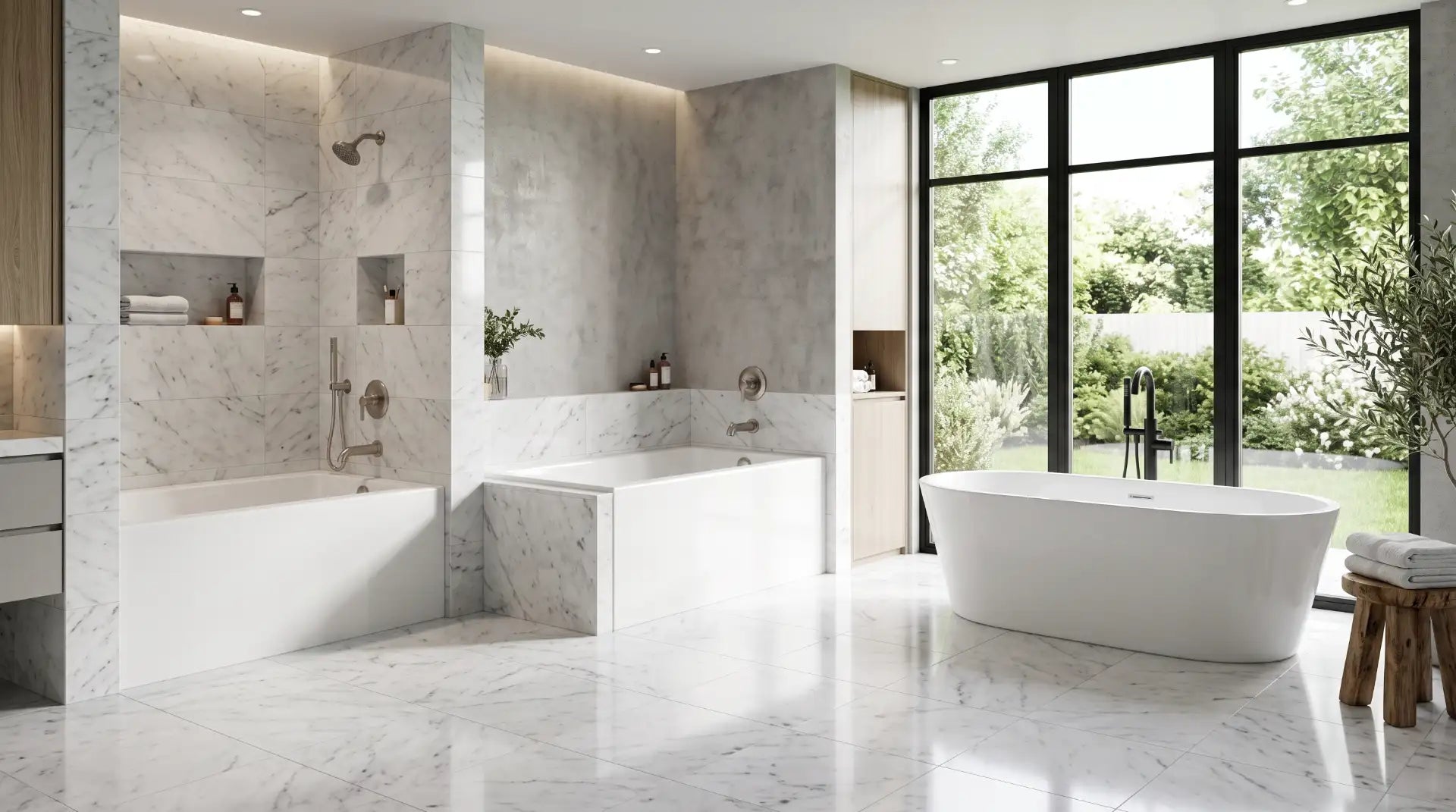
Standard, small, and large tub dimensions - length, width, depth, and water capacity - plus the exact five-step method for measuring your bathroom before you buy. So the tub you order actually fits.
A bathtub is one of the few fixtures you cannot fudge. A vanity can be trimmed, a mirror can be swapped, tile can be cut to fit - but a tub is a single molded shell that either fits the space and the plumbing or it does not. Order one that is two inches too long for the alcove, or one whose drain sits on the wrong end, and the "solution" is returning a heavy freight item and starting over. Size is where most bathtub purchases go wrong, and it is almost always avoidable with a tape measure and fifteen minutes.
This guide covers every standard bathtub dimension that matters in the US market - length, width, height, soaking depth, and water capacity - across alcove, freestanding, drop-in, corner, soaking, Japanese, and walk-in tubs. Then it walks through exactly how to measure your bathroom, your doorway, and your existing drain so the tub you order is the tub that fits. If you are still deciding on a tub style before you get to sizing, start with our complete bathtub buying guide.
If you just need the number, jump to the standard size section or the dimensions chart. If you are replacing an existing tub, read the measuring and rough-in sections carefully - matching the drain location is the step that saves the most money. If you are choosing a tub for a specific room, use the "what size fits your bathroom" section to narrow it down before you shop.
The standard bathtub size in the United States is 60 inches long, 30 to 32 inches wide, and 14 to 16 inches high, with a usable soaking (water) depth of roughly 12 to 14 inches. This is the standard alcove tub - the built-in tub designed to slot into the classic five-foot tub nook found in the majority of American full bathrooms. When a contractor, real estate listing, or big-box store refers to a "standard tub," this is the size they mean.
From that baseline, sizes move in two directions. Compact tubs run 48 to 54 inches long for tight bathrooms, and large soaking and freestanding tubs run 66 to 72 inches long for a roomier soak. Width and depth vary more than length - a deep soaking tub can be 20+ inches tall while keeping a standard footprint. The one rule that never changes: confirm the exact dimensions on the manufacturer's spec sheet before you buy, because two tubs labeled "60 inch" can differ by an inch or more in width and several inches in depth.
Tub "size" only means something once you know the tub type, because each type sizes differently. Here is the typical dimension range for each of the main categories on the US market.

The built-in tub enclosed by walls on three sides with one finished apron. Standard is 60" long; compact versions run 48-54". The default for most US full bathrooms and the easiest like-for-like replacement.

A standalone tub finished on all sides, meant to be viewed in the open. Taller overall than alcove tubs, with deeper soaking. Needs clear space around it - see the clearance rules below.

A shell that drops into a framed, tiled deck. Sizing is flexible because the deck is built to fit, but you must account for the surrounding deck footprint, not just the tub shell.

A triangular footprint that tucks into a corner. Each wall side typically runs 48-60". Deep and often wide enough for two, but it consumes a large floor area - best for spacious bathrooms.

Prioritizes water depth over length. Can share a standard footprint but sits taller so water covers the shoulders. The depth number matters far more than the length here.

Short but very deep, designed for a seated soak. The smallest floor footprint of any full-depth tub - the go-to when space is tight but you still want a real, shoulder-deep soak.
Deciding between a built-in alcove tub and a freestanding tub is often the real question hiding behind "what size do I need." Our guide on freestanding vs built-in bathtubs walks through the space, plumbing, and budget trade-offs in detail.
Use this as a quick reference for typical dimensions by tub type. These are standard ranges across the US market - individual models vary, so always verify against the specific product's spec sheet before ordering.
| Tub Type | Length | Width | Height | Soaking Depth | Typical Capacity | Best For |
|---|---|---|---|---|---|---|
| Compact Alcove | 48-54" | 30-32" | 14-16" | 11-13" | 25-40 gal | Small & kids' baths |
| Standard Alcove | 60" | 30-32" | 14-17" | 12-14" | 40-60 gal | Most US bathrooms |
| Freestanding | 55-72" | 27-34" | 24-32" | 15-23" | 50-90 gal | Statement primary baths |
| Drop-In | 45-72" | 30-42" | 18-24" | 14-20" | 40-90 gal | Custom tiled decks |
| Corner | 48-60" / side | 48-60" / side | 18-24" | 16-22" | 60-100+ gal | Large bathrooms |
| Deep Soaking | 55-72" | 30-36" | 20-27" | 18-24"+ | 60-100 gal | Shoulder-deep soaks |
| Japanese (Ofuro) | 44-48" | 30-34" | 27-34" | 22-27" | 60-100 gal | Deep soak, small footprint |
| Walk-In | 47-60" | 28-36" | 38-42" | High (seated) | 40-80 gal | Accessibility & safety |
Depth is the most misread bathtub spec, because two different numbers both get called "depth." The overall height is the outside measurement from the floor to the top rim of the tub. The soaking depth (sometimes "water depth" or "depth to overflow") is how deep the water actually gets before it reaches the overflow drain - and that is the number that determines whether the water covers your body when you lie back.
A standard alcove tub is 14 to 16 inches tall but only holds about 12 to 14 inches of water to the overflow. A deep soaking tub might be 22 inches tall and hold 18 to 20+ inches of water. If a relaxing, shoulder-covering soak is the goal, look for soaking depth of at least 15 inches, and ideally 18+. Do not judge a tub by its overall height alone - a tall tub with a low overflow can still give a shallow soak.
Want a deeper soak in a standard tub? Some tubs offer an adjustable or relocated overflow, or you can pair the tub with an overflow cover to raise the waterline. Check the spec sheet for the overflow position - a higher overflow means a deeper soak in the same-size shell.
Bathtub size is not only a question of whether the tub fits the floor plan - it is also a question of whether the floor can carry it. Water weighs about 8.3 pounds per gallon. A standard tub holding 40 to 60 gallons adds roughly 330 to 500 pounds of water alone. Now add the tub itself and a person:
| Load Component | Standard Alcove (Acrylic) | Large Soaker | Cast Iron Tub |
|---|---|---|---|
| Empty tub weight | 70-100 lb | 100-150 lb | 300-500 lb |
| Water (to overflow) | ~330-500 lb | ~500-750 lb | ~400-600 lb |
| Bather | 150-200 lb | 150-200 lb | 150-200 lb |
| Total load (approx.) | ~550-800 lb | ~750-1,100 lb | ~850-1,300 lb |
For a standard acrylic tub on a normally framed floor, this is rarely a problem. But a large soaking tub or a cast iron tub - especially on an upper floor or over a long joist span - can approach or exceed the load a typical floor is designed for. If you are considering a big soaker or a cast iron tub, have the floor structure checked before installing. Material choice drives most of this weight, which is covered in depth in our acrylic vs cast iron bathtub comparison.
Measuring for a tub takes about fifteen minutes and prevents the two most expensive mistakes: a tub that will not physically fit the space, and a tub that will not fit the plumbing. Record everything in inches, then compare against the spec sheet before you order.
Measure the length of the tub space
For an alcove, measure wall to wall along the back wall at floor level - this is your maximum tub length, and the standard opening is 60". For a freestanding or drop-in tub, measure the total clear floor length available for the tub plus its surrounding space.
Measure the width (front to back)
Measure from the finished back wall out to where the front apron will sit (alcove), or the full depth of floor you can dedicate to the tub and clearance (freestanding). Standard tub width is 30-32"; confirm the front edge will not block a door swing or walkway.
Check vertical and ceiling clearance
Confirm the tub height works with any window sill, and if the tub sits under a sloped ceiling or in a shower-tub combo, check the ceiling height for standing headroom. Tall freestanding tubs also need enough clearance to step in comfortably.
Locate the existing drain
Measure from the back wall to the center of the existing drain, and note whether it is at the left end, right end, or center. Your new tub's drain must line up with this - a mismatch means rerouting the drain line. This is the single most cost-critical measurement in a replacement.
Measure the delivery path
A tub is a large, rigid freight item. Measure every doorway width, hallway turn, and stairwell between the front door and the bathroom. Cast iron and large soaking tubs are heavy and inflexible - confirm the tub can physically travel to the room before you buy.

For a standard alcove tub, the drain sits at one end of the tub, and the waste outlet is typically roughed in about 14 to 16 inches from the finished back wall at the drain end. Tubs are sold as left-drain or right-drain (the end where the drain sits as you face the tub), so ordering the correct hand is essential for a clean connection to existing plumbing.
Freestanding tubs are different: they usually connect to a drain in the floor, either centered or offset, and offer far less flexibility to shift the connection. If you are installing a freestanding tub, measure the exact position of the floor drain and confirm the tub's drain location matches - or budget for moving the drain, which can mean opening the floor. Faucet placement matters too; for guidance on filler height, reach, and clearance around the tub, see our bathtub filler faucet buying guide.
Once you know the tub types and their footprints, matching a tub to a room is straightforward. Use this as a starting point, then confirm with your own measurements and the tub's spec sheet.
If a freestanding tub is on your shortlist, our roundup of the best freestanding bathtubs of 2026 compares real models by size, style, and material to help you land on the right footprint.
In a small bathroom, the instinct is to buy the smallest tub possible - but the smarter move is to buy the deepest tub that fits, not just the shortest. A 48 to 54 inch alcove tub reclaims floor space, while a compact deep soaker or a Japanese-style tub gives you a genuine shoulder-deep soak in a footprint barely larger than a shower base. Length is what you sacrifice in a small room; depth is what you protect.
For a small bathroom, prioritize in this order: confirm the tub fits the alcove or floor area, match the existing drain to avoid plumbing work, then choose the deepest soaking depth available in that footprint. A compact freestanding soaker can also work beautifully in a small room, provided you can still leave clearance for entry and cleaning. Whichever direction you go, a soaking tub vs a jetted tub is a separate decision worth understanding - our soaking tub vs jetted tub guide breaks down which is worth it.
Bathify carries freestanding and drop-in bathtubs from Vanity Art and more, across the full size range - from compact soakers for tight bathrooms to roomy 67" freestanding tubs. Here are standout picks by footprint.

At roughly 54.7" long by 28.3" wide, the Adonis is the go-to freestanding pick when floor space is tight. The compact footprint fits rooms that cannot take a full 60"+ tub, while the gentle sloping interior still delivers a comfortable single-person soak. 100% acrylic reinforced with fiberglass, stain- and scratch-resistant, and light enough (relative to cast iron) to sit on a normally framed floor.

The Alto's 59" oval, flatbottom design hits the sweet spot for most bathrooms - large enough for a full-length soak, compact enough to fit a standard-sized room with clearance. The ergonomic pure-scape interior follows the curves of the body, and the flatbottom base sits stable on any finished floor. Glossy white acrylic reinforced with fiberglass, engineered for a single-person soak.

Same practical 59" flatbottom footprint as a standard freestanding tub, with a non-slip base - a meaningful upgrade for households with kids, older adults, or anyone who wants surer footing getting in and out. Acrylic and reinforced fiberglass construction with stain- and scratch-resistant properties, easy to place anywhere in the bathroom.

At 67" long with a clean rectangular flatbottom profile, the Trent is the pick when you have the room for a genuinely spacious soak. The straight-lined geometry suits modern and contemporary bathrooms and gives more usable interior length than a curved oval of the same footprint. Remember the clearance rule - a 67" tub needs open space around it - and confirm your floor can carry a larger water volume.
Match the size to the space and the plumbing - then buy the deepest tub that fits
Standard full bathroom (5' × 8'): A 60" standard alcove tub is the safe, efficient default - it fits the classic tub nook and reuses the existing rough-in for a clean replacement.
Small or tight bathroom: A 48-54" compact alcove, or a compact freestanding/Japanese-style soaker. Protect soaking depth over length - a short but deep tub beats a short shallow one.
Standard room, want a statement: A 55-59" freestanding tub (the Alto or Palma) delivers the freestanding look while still fitting a normal-sized room, provided you leave clearance on all sides.
Large bathroom, roomy soak: A 66-72" freestanding soaker (the Trent) - but confirm floor loading for the larger water volume and check your water heater can fill it.
Replacing an existing tub: Match type, length, and drain hand to the old tub. Same footprint plus same drain location equals the lowest-cost, lowest-risk swap.
Shop Bathtubs at Bathify
Freestanding and drop-in bathtubs in every size - compact soakers to roomy 67" tubs - from Vanity Art and more. Free shipping on orders over $50. Shipped across the USA.


