







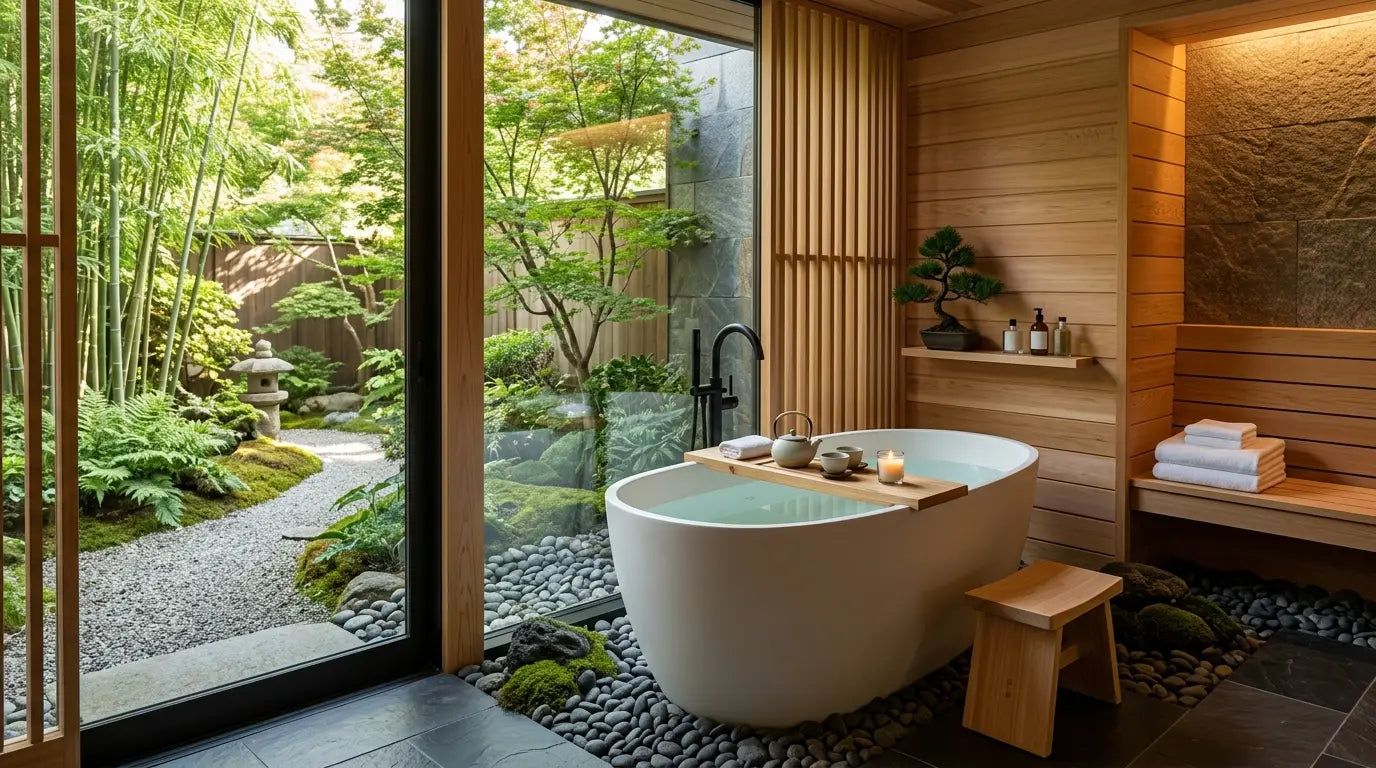
Deep, compact, and built for a genuinely restorative soak. This guide covers what a Japanese soaking tub (ofuro) really is, the materials and sizes that matter, ofuro tub ideas for your space, what installation actually requires, real costs, and the deep soaking tubs worth buying at Bathify.
A few years ago, the Japanese soaking tub was a niche request - the kind of fixture you saw in luxury spa hotels or high-end architectural builds. Today it's one of the most-searched bathtub styles in the US, and the reason is simple: homeowners want the bathroom to feel like a wellness space, not just a utility room, and the ofuro delivers that experience in a footprint most bathrooms can actually accommodate.
The appeal is a genuine trade-off in your favor. A traditional Western tub is long and shallow, so you recline with your knees and shoulders drifting in and out of the water. A Japanese soaking tub flips that geometry - it's short and deep, so you sit upright and stay submerged to the shoulders. You get a warmer, more complete soak from a tub that takes up far less floor space. This guide walks through exactly what an ofuro is, how it's meant to be used, the materials and sizes to choose between, a set of ofuro tub ideas for your own bathroom, and the practical realities of installation and cost - with honest guidance at every step.
If you're still deciding whether a soaking tub is right for you at all, start with our complete bathtub buying guide, then come back here for the deep dive on the Japanese style specifically.
If you already know you want a Japanese-style tub and just need to pick one, jump to the comparison table and the Bathify picks near the bottom. If you're weighing whether an ofuro fits your bathroom, budget, and floor, read the Installation and Cost sections first - they cover the details that make or break the project.

A Japanese soaking tub - known in Japan as an ofuro - is a deep, compact bathtub designed for full-body immersion in a seated, upright position. Rather than lying back the way you would in a standard tub, you sit with your knees bent and your body submerged to the shoulders. The design prioritizes depth over length, which is the single defining characteristic: an ofuro is typically 24 to 27 inches deep on the interior (some run deeper), compared with roughly 14 to 16 inches for a conventional bathtub.
That extra depth is what makes the soak feel so different. In a standard tub, water rarely reaches above your midsection when you're reclined. In an ofuro, warm water surrounds you from the shoulders down, so heat is retained around your whole body and the muscles relax more completely. Because the tub gains its capacity from height instead of length, the footprint stays small - many models are only 38 to 60 inches long, letting a serious soak fit into bathrooms where a full-length tub would feel cramped or wouldn't fit at all.
One important cultural distinction: in Japan the ofuro is used strictly for soaking and relaxation, not for washing. You clean yourself thoroughly at a separate shower or wash station first, then step into the tub clean. That's why traditional ofuro water can stay clean enough to be shared, in sequence, by an entire household in one evening.
Understanding how an ofuro is meant to be used changes how you'll plan the space around it. Japanese bathing is a two-stage ritual, and only the second stage happens in the tub:
Before entering the ofuro, you wash and rinse your entire body at a separate area - traditionally a low stool with a handheld shower or a bucket and faucet. This is where the actual cleaning happens: soap, scrubbing, shampoo, all of it. By the time you step into the tub, you're already clean.
The tub is only for soaking. You enter clean, sink into the deep hot water (often warmer than a typical Western bath, around 100-104°F), and stay there to warm the body and unwind. Because no soap or grime enters the water, it stays clean - which is why households traditionally keep the same bath water warm and reuse it across multiple people in one evening.
For a US bathroom, this ritual has two practical implications. First, an ofuro pairs best with a nearby shower or a wet-room layout, so you can rinse before soaking. Second, if you love the idea of keeping the water hot for a long soak or reusing it, look for a tub compatible with an inline water heater or recirculating system. If you want to compare the ofuro approach with a jetted or whirlpool experience, our soaking tub vs jetted tub guide breaks down which delivers the relaxation you're after.
"Soaking tub" and "Japanese soaking tub" get used loosely, so it's worth separating the three categories clearly. All three let you bathe, but they deliver very different experiences and fit very different bathrooms.
| Feature | Japanese Soaking Tub (Ofuro) | Deep Soaking Tub (Western) | Standard Bathtub |
|---|---|---|---|
| Posture | Seated, upright | Reclined, deeper water | Reclined, shallow |
| Interior depth | 24-27"+ | 18-24" | 14-16" |
| Typical length | 38-60" | 55-72" | 60" |
| Immersion | To the shoulders | Chest to shoulders | Waist to chest |
| Footprint efficiency | Excellent | Moderate | Moderate |
| Good for showering | No | Some | Yes |
| Water volume per fill | High (deep) | High | Lower |
| Best for | Wellness soak, small spaces | Long reclined soak | Everyday bath + shower combo |
The short version: choose an ofuro if you want the deepest, most immersive soak in the smallest footprint and you have a separate shower. Choose a Western deep soaking tub if you'd rather stretch out and recline. For a full breakdown of the deep-soak category, see our deep soaking tubs buying guide.
Beyond the aesthetic, there are concrete reasons the ofuro has become a genuine trend rather than a passing one. Here's what actually wins people over.
Immersing to the shoulders in hot water helps muscles release, eases tension, and creates the "reset" feeling a shallow bath can't match. Many owners describe it as the most restorative part of their day.
A compact ofuro delivers a full soak in a footprint too small for a standard tub - the reason it's a favorite for condos, apartments, and tight primary or guest baths.
A warm evening soak followed by the body cooling afterward is a well-known relaxation and sleep ritual - the ofuro turns that into a nightly habit rather than an occasional treat.
The clean, sculptural silhouette of a Japanese-style tub anchors a room instantly. It reads as calm, intentional, and spa-like - a high-impact upgrade for the whole bathroom.
Material is the decision that most affects price, heat retention, weight, upkeep, and how "authentic" the tub feels. Here's how the main options stack up for a US home.

Authentic ofuro are made from hinoki (Japanese cypress) or similar aromatic woods. Wood insulates naturally, so the water stays warm, and hinoki releases a distinctive calming scent that's central to the traditional experience. The trade-off is maintenance: wood must be kept properly damp or dried on a schedule, cleaned gently without harsh chemicals, and protected from mold, warping, and cracking. It's the choice for authenticity and sensory experience - if you're prepared for the care it demands.

Acrylic reinforced with fiberglass is the most common and most affordable material for modern Japanese-style soaking tubs. It's lightweight (easier to deliver and install, and gentler on floors), non-porous, warm to the touch, easy to clean, and resistant to stains and scratches. It doesn't hold heat quite as long as stone resin or wood, but for most homeowners it's the best balance of price, practicality, and looks.

Solid-surface stone resin (a composite of natural minerals and resin) is the standout modern option. It has a substantial, natural-stone feel, retains heat noticeably longer than acrylic for extended soaks, resists stains and scratches, and needs almost no special care. It's heavier and pricier than acrylic - which is worth planning for on upper floors - but delivers the most luxurious low-maintenance deep soak.

Copper conducts and retains heat beautifully and develops a living patina over time; stainless steel is durable and modern. Both are premium, often custom, and are frequently chosen for indoor-outdoor or statement installations. Expect the highest prices in this category.
If you want the broader material comparison across all tub types - including how these hold up against cast iron long-term - read acrylic vs cast iron bathtub.
Japanese soaking tubs come in a few core shapes, and choosing the right one depends on your bathers and your bathroom's dimensions. Depth is non-negotiable - that's what makes it a soaking tub - but length and shape give you room to fit the space.
On dimensions: length runs from roughly 38 inches for the smallest single-person tubs up to 60 inches and beyond for two-person models. Interior depth generally starts around 24 inches and climbs from there - that depth is what lets water reach your shoulders while seated. Before you fall in love with a specific tub, measure your bathroom and your access path (doorways, stairwells, and hallways for delivery), and use our bathtub sizes and dimensions guide to confirm the fit.
Leave clearance to step in. Because ofuro sides are tall, plan for at least 24-30 inches of clear floor on the entry side so you have room to climb in and out safely. In a small bathroom, position the tub so that clearance overlaps with the room's natural circulation path rather than stealing extra square footage.
A few optional features meaningfully change the ofuro experience. Decide which matter to you before you shop, because they narrow the field quickly.
Many Japanese soaking tubs include an integrated seat or ledge so you sit at the correct depth comfortably. A built-in seat is what makes the upright soak feel natural rather than like folding into a bucket - if authenticity and comfort matter, prioritize it.
Because a deep soak is all about staying in warm water, some ofuro setups pair with an inline heater that keeps the water at temperature and circulating. This is the feature that lets you soak for a long time without the water cooling - and it enables the traditional practice of keeping water warm to reuse. It adds cost and complexity, so weigh it against how long your soaks really run.
Oval and larger rectangular models can fit two bathers. Just remember that doubling the size multiplies the water volume and weight - which pushes harder on your water heater capacity and floor load. Plan accordingly.
Ofuro-style tubs work beautifully in indoor-outdoor settings and covered patios, especially in copper or stainless. If you're considering an outdoor install, confirm the tub and materials are rated for it and plan drainage and weather protection.
A deep tub needs a filler that can deliver enough flow to fill the basin without an endless wait, and it needs to match your tub's design (freestanding floor-mount vs wall-mount). This choice is easy to overlook and important to get right - our bathtub filler faucet buying guide covers flow rate, mounting, and finish. Browse compatible options in the Bathify tub faucets collection.
The tub is only half of the experience - the space around it is what turns a bathroom into a retreat. Here are ofuro tub ideas that consistently work, from full renovations to simple styling upgrades.
Positioning the tub beside a window (with privacy glazing or a garden view) is the single most impactful move. Natural light and an outdoor sightline amplify the calm, meditative quality the ofuro is designed for. A rectangular tub tucked under a horizontal window is a timeless composition.
Because the ofuro pairs with a separate wash area, a wet room - shower and tub sharing one waterproofed, drained space - is the most authentic and functional layout. It supports the wash-then-soak ritual and looks seamless and modern.
Pair the tub with wood-look tile or stone, warm neutrals, and matte black or brushed finishes. The goal is a spa-like, grounded feel - not a glossy, high-contrast bathroom. A hinoki or wood tub reinforces this instantly; an acrylic or stone-resin tub gets there through the surrounding materials.
Skip the bright overhead. Use dimmable, warm lighting, a wall sconce, or even candles nearby to make evening soaks feel restorative. Lighting temperature does a lot of quiet work here - the same principle we cover for grooming spaces applies to relaxation zones.
One well-chosen plant, a wood bath caddy for a book and a drink, and a stack of neatly rolled towels are all the styling an ofuro needs. Restraint is the aesthetic - the tub is the statement, so let it lead.
If your layout allows, a tub set near sliding doors that open to a private courtyard or deck brings the onsen feeling home. Even a small screened patio nook can host a weather-rated soaking tub for a genuine indoor-outdoor ritual.
A Japanese soaking tub is deeper and often heavier than a standard tub, so a few things deserve a check before you buy. None of these are dealbreakers - but skipping them causes the most regret.
A deep tub holds a lot of water. Water weighs about 8.34 lbs per gallon, so a filled acrylic ofuro plus bather often runs 1,000-1,200 lbs, and a stone-resin or cast model can exceed 1,500 lbs - concentrated over a small footprint. Standard US residential floors are engineered for roughly 40 lbs per square foot of live load. A light acrylic tub on a ground-floor slab is usually fine; for heavier materials, upper floors, or older framing, have a contractor or structural engineer confirm the joists before you install.
A deep soak needs more hot water than a shallow bath. Before committing, confirm your water heater can fill the tub to a comfortable depth in one go. If it can't, options include a larger tank, a tankless unit sized for the flow, or an ofuro with an inline heater that warms and recirculates the water you already have.
Freestanding Japanese soaking tubs need floor or wall plumbing routed to the tub's location, plus a compatible drain and overflow kit. Getting the drain type right matters for fit and finish - browse options in the Bathify drains collection, and buy your drain and overflow as a matched set so the finishes align.
These tubs are bulky. Measure every doorway, hallway turn, and stairwell on the delivery path - not just the bathroom. It's a common and avoidable surprise. When you're comparing freestanding options, our roundup of the best freestanding bathtubs of 2026 notes footprints and formats that ship and install more easily.
Prices vary widely by material, so it helps to think in tiers. Here's a realistic picture of the US market, plus the extras that people forget to budget for.
| Tier / Material | Typical Price | What You Get |
|---|---|---|
| Acrylic (modern) | $900-$1,500 | Lightweight, easy-care deep soak; the practical default for most homes. |
| Solid-surface stone resin | $2,000-$3,500 | Natural-stone feel, best heat retention, near-zero maintenance. |
| Hinoki / wood (traditional) | $4,000-$10,000+ | Authentic ofuro, natural aroma and insulation; high maintenance. |
| Copper / stainless (specialty) | $5,000-$15,000+ | Statement and indoor-outdoor builds; often custom. |
Then budget for the extras: a compatible tub filler faucet, a drain and overflow kit, delivery of a heavy item, and professional installation (plumbing plus any floor or water-heater work). Bathify's modern acrylic and stone-resin soaking tubs sit in the most accessible tiers, ship free on orders over $50 across the USA, and cover the deep-soak experience without the upkeep of traditional wood.
| Pros | Cons |
|---|---|
| Deepest, most immersive soak (to the shoulders) | Not made for quick showers or bathing kids |
| Fits small bathrooms - depth over length | Deep sides take more effort to step in/out |
| Striking, spa-like focal point | Uses more hot water per fill |
| Supports a genuine wellness ritual | Heavier when full - may need a floor check |
| Modern acrylic/stone-resin models are low-maintenance | Traditional wood ofuro require real upkeep |
How much care your ofuro needs depends almost entirely on material.
Acrylic and stone resin are the easy ones: wipe down after use, clean with a non-abrasive bathroom cleaner, and avoid harsh scouring pads that could dull the finish. Non-porous surfaces resist staining and won't harbor mold if kept reasonably dry. This is one of the biggest reasons modern materials have overtaken wood for everyday US use.
Wood (hinoki and similar) is the demanding one: it needs a consistent routine to prevent mold, warping, and cracking - typically keeping it appropriately damp or drying it properly between uses, cleaning gently without chemicals, and ensuring good ventilation. Beautiful and aromatic, but a real commitment. If low maintenance is a priority, that alone often settles the material decision.
| Material | Heat Retention | Weight | Maintenance | Price Tier | Best For |
|---|---|---|---|---|---|
| Acrylic | Good | Light | Low | $ | Most homes, upper floors, budget |
| Stone resin | Excellent | Heavy | Low | $$ | Best modern all-rounder, long soaks |
| Hinoki / wood | Excellent | Moderate | High | $$$ | Authenticity, aroma, tradition |
| Copper | Excellent | Moderate | Moderate | $$$ | Statement & indoor-outdoor |
| Stainless steel | Good | Moderate | Low | $$$ | Modern, durable, outdoor |
Bathify carries a curated range of deep freestanding soaking tubs from Vanity Art in acrylic and solid-surface stone resin - the modern, low-maintenance path to an ofuro-style soak. These are the standout picks across shape, footprint, and budget.

The most accessible way into a deep soaking tub. At 59 inches, the Palma keeps a compact footprint while its flat-bottom, non-slip design and ergonomic sloping lines deliver a comfortable, secure soak. UPC-certified 100% acrylic reinforced with fiberglass - lightweight, easy to clean, and gentle on floors, which makes it a smart pick for apartments and upper-floor bathrooms.

From Vanity Art's Serenity collection, the Alto's oval "pure-scape" form is ergonomically engineered so the tub cradles your body for peaceful, upright-leaning immersion. The gentle interior curves follow your natural lines, and the 100% glossy white acrylic (never painted, reinforced with fiberglass) keeps its finish for the long haul. A refined, sculptural choice for a single bather who wants comfort first.

The rectangular Trent is the closest match to the classic wooden ofuro silhouette - clean, architectural lines that sit neatly against a wall or under a window. At 67 inches it gives taller bathers room while still reading as a modern soaking tub. Durable UPC-certified acrylic reinforced with fiberglass, stain- and scratch-resistant, and easy to place anywhere plumbing allows.
Shop: Vanity Art Trent 67" Rectangular Soaking Bathtub at Bathify →

For the most luxurious, longest-lasting soak, the Faelan's solid-surface stone resin retains heat far better than acrylic - so the water stays warm through a long, meditative soak. It has a substantial matte-white, natural-stone feel, a smooth non-porous surface that resists stains and scratches, and near-zero special maintenance. At 67"×34" it's a genuine statement piece and the standout modern alternative to a wood ofuro.
Shop: Vanity Art Faelan 67" Stone Resin Bathtub at Bathify →
Match the tub to your space, your soak, and your appetite for upkeep
Small bathroom, want a real soak: A compact acrylic model like the Palma 59" delivers deep immersion in a footprint a standard tub can't match - the best value entry point.
Comfort-first single bather: The oval, ergonomically shaped Alto cradles the body for the most relaxed upright soak.
Modern, architectural look: The rectangular Trent gives the classic ofuro silhouette in low-maintenance acrylic, with room for taller bathers.
Best all-around, longest-lasting warmth: The stone-resin Faelan retains heat far longer than acrylic and needs almost no care - the smart modern alternative to a costly, high-upkeep wood ofuro.
Authenticity above all: A traditional hinoki wood ofuro delivers the scent, insulation, and heritage - if you're ready for the maintenance and the premium price.
Whatever you choose, confirm your floor load, water-heater capacity, and delivery access first, and pair the tub with a properly sized tub filler and matched drain.
Shop Soaking Tubs at Bathify
Deep freestanding soaking tubs in acrylic and solid-surface stone resin from Vanity Art - plus tub fillers and drains to complete the install. Free shipping on orders over $50, shipped across the USA.


